
Introduction
Title: Why Does School Matter?
Though it may seem fairly straightforward, school is an integral part of students’ lives, so the learning environment of the school will definitely impact students’ wellbeing and performance in school. For neurodivergent students, they have specific needs, diverse learning styles and strengths, and they learn at different paces, thus it is essential to learn in the right school and environment. A right learning environment will help neurodivergent students receive the support in their cognitive, social, and emotional development, whilst helping them discover their full potential and equip them with the necessary skills and confidence for the workforce.
Article 1: How neurodivergent students are supported in different schools currently and plans in the future
Title: For those that slip through the cracks
Singapore’s education system is known globally for its effectiveness, with students consistently ranking near the top in education amongst OECD countries. However, these results come alongside many caveats – there is a large focus on standardised testing and academic performance, as well as a competitive environment that borders on unhealthy. Students that lack proper exam skills may find themselves at a disadvantage, which is particularly true of students with neurotypes that demand different styles of learning.
While certainly not an issue glossed over by the Ministry of Education (MOE), the concrete efforts taken to support neurodivergent students may be somewhat unclear to us. Here are some of the measures taken to support Special Education Needs students in mainstream schools.
Access Arrangements
Access Arrangements, or AA, are granted by Singapore Examinations and Assessment Board (SEAB) for students with Special Education Needs. They allow these students to sit for exams with a little extra support, which include:
- Extra time for exams (school-based and national exams)
- For every hour, the student gets 15 additional minutes to finish the paper.
- Specially printed papers
- For students with dyslexia or SPD, the exam paper can be printed with larger fonts.
- The paper can also be printed on only one side, or in two different booklets to reduce page flipping.
- Being in a different room
- For students with ADHD or ASD, this can reduce distractions during the exam.
- Use of computer, scribe
- Students with motor dysfunction or dysgraphia can be allowed to type out their exams, or have a scribe write the exam for them.
- Teacher’s assistance
- Teachers can keep students with ADHD on track by tapping their tables when they get distracted.
- For students with dyslexia taking oral examinations, it can be requested that the examiner be informed of the student’s diagnosis.
- Exemption from Mother Tongue
- This is given to students with Special Education Needs that are not coping well with their overall studies, to reduce the overall academic load.
AA can be applied for on https://www.seab.gov.sg/home/examinations/access-arrangements, or you can consult with your child’s school to see if additional support can be provided.
Specialised personnel
Special Educational Needs (SEN) Officers are deployed to schools to provide learning and behaviour support through individual or small group intervention or skills training, or in-class support for approximately 30 to 60 minutes per week. Teachers Trained in Special Education Needs (SEN teachers) also provide learning support and plan instructional strategies and adapt lessons for students with special educational needs, and share strategies with other teachers in school. What this means is that lines of communication can be established between teachers, therapists and parents, which is crucial to help all parties understand how to support students.
However, the onus is still on the student to approach their teacher when they are struggling to keep up with demands or when the pressure is too high – They must learn to approach those who can help them, and ask the right questions. This can and should be taught in environments outside of the classroom, i.e. at home or with external therapists.
Additional programmes
In addition to referrals to external help, for needs beyond what can be attended to in school, MOE has also organised interventional programmes for younger primary school students.
Firstly, the Learning Support Programme and Learning Support for Mathematics is available for Primary 1 and 2 students who need additional help with English Language and Mathematics. The programmes are held for 30 minutes a day, and in small groups of 8 to 10 students to ensure sufficient attention is given to each student.
Secondly, TRANsition Support for InTegration (TRANSIT) is a programme that takes place during Primary 1 to help students with “social and behavioural needs develop independence through learning foundational self-management skills”. According to MOE, schools proactively identify the students who require support, using information shared by parents and teachers, and through systematic observations conducted by trained personnel, like SED officers or teachers. TRANSIT is also planned to be introduced to all primary schools by 2026.
Lastly, the School-based Dyslexia Remediation programme is for students with dyslexia specifically in Primary 3 and 4, while students with dyslexia in other levels will have access to the MOE-subsidised Main Literacy Programme conducted by the Dyslexia Association of Singapore.
https://www.moe.gov.sg/special-educational-needs/school-support/primary-schools
Article 2: How to support your child through their schooling in Singapore
Title: A Comprehensive Guide to Schooling in Singapore
Picking the right school for your child
Children with a learning disability may require different or additional resources in comparison to their peers, and may benefit from a specialised environment or facilities. Support can be given in many areas, such as reading, communication, and socialising.
When it comes to specialised education needs, there are two main categories of schools: mainstream schools where additional assistance is provided, or SPED (specialised education) schools, which can provide more customised and comprehensive support. Every child has different needs, and will make the most progress with support that is tailored to them individually. Speaking to a qualified professional can help you better understand your child’s needs, and choose the educational setting that is the most appropriate for them
q21
The professional will recommend a school based on the child’s cognitive abilities and adaptive skills- that is, their ability to think and learn in a school setting, and their ability to perform daily tasks independently.
What kind of support can my child receive in a mainstream school?
About 80 percent of these students are in mainstream schools. The remaining 20 percent with more severe special educational needs are supported in the 22 special education schools here, with a further six to become operational by the 2030s.
If your child is able to cope with the demands of mainstream education, they may attend a mainstream school while receiving extra support. Typically, they would only require some additional help due to dyslexia, ADHD or mild ASD.
Examples of support include:
Specialised personnel such as teachers trained in Special Needs
Support programmes and school-based intervention (remedial, separate classes)
Students can also request accommodations during lessons or exams.
When should I consider an SPED school placement for my child?
An SPED school placement could benefit your child if they require more customised and comprehensive support.
Examples of support include:
Customised curriculum and support
Specialised personnel such as:
Speech and Language therapists
Occupational therapists
Psychologists
Social workers
Two main curriculums are offered at SPED schools. That would be a customised curriculum, and the national curriculum. A customised curriculum is aimed at providing a child-centred, holistic learning experience while equipping the child with life skills. The national curriculum allows your child to sit for the PSLE at the end of 6 years, and enter a secondary school of their choice.
For students with ASD, two SPED schools in Singapore offer the national secondary curriculum. Pathlight School, and St Andrew’s Mission School.
More about the curriculum offered in SPED schools: https://www.moe.gov.sg/special-educational-needs/curriculum
For a more comprehensive guide on choosing the right school for your child: https://www.oecd.org/pisa/publications/PISA2018_CN_SGP.pdf
Other things to consider
Apart from your child’s cognitive and adaptive abilities, here are some other things you can consider while choosing the right school for your child:
Ensure that the institute’s values and beliefs align with what you desire for your child
Consider and weigh the benefits and limitations that your child may face while enrolled
Visit the school in person and take note of facilities and staff that your child will be interacting with; keep an eye out for potential hazards
Learn more about your child and their specific needs and try to make sure that these needs are addressed as best as possible
Understand how your child learns best
Ask yourself: “Which setting will be the most productive, beneficial, stimulating and least threatening place for my child to learn?”
Source: https://thenewageparents.com/children-with-special-needs-choosing-school/
Taking a foundation subject
In Primary 5 and 6, students can opt to take one or more subjects at a foundation level. This allows them to be challenged in the subjects they are good at while also allowing them to improve in the subjects with which they require help.
The student will be recommended a subject combination based on their performance in primary 4.
Taking one or more foundation subjects is not a disadvantage for your child. Rather, it will benefit them in the long term, as they can build a strong foundation in these subjects before they enter secondary school.
For more information on Subject-Based Banding in Primary School: https://www.moe.gov.sg/primary/curriculum/subject-based-banding
Higher mother tongue is offered to students who pass all four subjects. If the student is not coping well academically overall, they may be granted exemption from taking a Mother Tongue Language. They can also choose to take their MTL at a foundation level. You can apply for exemption through your child’s school.
For more information regarding exemption from MTL: https://www.moe.gov.sg/primary/curriculum/mother-tongue-languages/exemption
Tuition
What kind of tuition (specially for SEN, group, 1-1)
How to know if child will benefit
There are many tutoring services available that cater specifically to children with learning disabilities. These services are typically run by people who have experience or training in teaching children with special needs, and can range from $40/hour to $90/hour.
Engaging a tuition service that is properly equipped to help children with learning disabilities can give them more time and resources to process their learning. It can also help them to catch up with their schoolwork with adult assistance, while you or your partner is at work.
Streaming
Full subject-based banding is a new scheme that will be implemented in 2024. It will take the place of secondary school streaming into Express, Normal (Academic) and Normal (Technical) streams.
Full subject-based banding would allow students to take subjects at a level that best corresponds to their ability. These subject levels will be labelled G(eneral) 3, G2 and G1, with G3 being the highest band. Students also have the option of dropping a band or going up a band as the school year progresses.
Secondary 1 posting will take into account the student’s posting group, which will be assigned based on a score range, and PSLE score.
More information can be found at: https://www.moe.gov.sg/microsites/psle-fsbb/full-subject-based-banding/about-full-sbb.html
Article 3: Interview with Therapists
Title: Decoding Therapy: A Guide to Choosing the Right Therapist for
You
1. Ali S. Therapy Concepts Everyone Needs to Know | NAMI: National Alliance on Mental Illness. Nami.org. Published 2019. https://www.nami.org/Blogs/NAMI-Blog/April-2019/Therapy-Concepts-Everyone-Needs-to-Know
Additional therapy
On average, schools have two to three Special Needs Education Officers (SENO) and one school counsellor. However, because a school usually has around 200-300 children, it will be quite tough to provide sufficient and consistent support. What the SENO does is to observe the child’s learning or behavioural issues in a classroom setting and provide the teachers with some strategies like having the child sit in the front row or having the child pair up with a buddy. If the SENO fails to manage, MOE’s educational psychologist would be sent in to intervene. However, one has to wait nine months before they can get a contact with someone from MOE and the support is relatively inconsistent. Additional therapy in a specific area may be more suited to your child’s needs and benefit them more.
Therefore, you may consider seeking help from specialists outside of school. Below are a few therapists who specialise in different areas and cater to different needs.
Educational Intervention
According to Ms Samantha Tang, a psychologist specialising in the field of educational intervention, the role of a psychologist mainly consists of two parts: The first being assessment, and the second being educational intervention. Personally, she specialises in the assessment of school-aged children.
Firstly, psychological assessments are carried out to diagnose a child between the ages 2 to 18, mainly for common neurodevelopmental disorders which include ASD, ADHD and dyslexia. Other disorders like language disorders would be under a speech and language therapist whereas those with sensory processing issues would be under an occupational therapist.
Secondly, for intervention, psychologists work with family, schools and important stakeholders to address the child’s behavioural issues and come up with a behavioural plan. The intervention plan is tailored to the child’s specific needs. For example, a dyslexic child would focus on practising literacy, spelling, reading fluency etc. On the other hand, if a child with ASD is struggling to keep up in school, the psychologist will come up with a method for him/her to revise the school’s syllabus in a more interactive and fun manner. While some intervention is carried out, a psychologist is more like a case manager who contacts all the different therapists and collects information about the child. After assessment, the child would be referred to specific specialists who cater to their needs.
In a nutshell, an educational intervention psychologist would be the first point of contact for a diagnosis. From there, the child can be referred to other specialists, depending on their needs and priorities.
1.The Orton-Gillingham Approach to Reading and Spelling + free E-book! All About Learning Press. Published August 5, 2019. https://blog.allaboutlearningpress.com/orton-gillingham/
Educational Therapist
Ms Jeniyanti Rijanto is an educational therapist who mainly provides educational intervention for children with dyslexia, ADHD and ASD. She makes use of the Orton-Gillingham approach which is a well established scientific teaching method to teach children literacy skills. Besides that, many children also lack motivation due to failure they experience in school. An educational therapists’ responsibility is to coach them and motivate them. During sessions, educational therapy helps a child to develop reading comprehension skills and writing skills so that they can better cope with school work. An educational therapist focuses more on intervention while an educational intervention psychologist mainly does the assessments and diagnosis.
All in all, those with dyslexia, ADHD and ASD can get in touch with an educational therapist so that they are up to speed with the syllabus taught in school.
Speech and Language Therapy
Based on an interview with Ms Low Kiah Yen, a speech and language pathologist from Ovspring Developmental Clinic, many schools have language intensive curriculums, and children who have language difficulties may find it hard to cope in school, due to the fast learning pace. Speech and language therapy provides children with the necessary skills to cope in a school environment, and improve in social communication. Apart from helping with enunciation and clarity of speech, children will learn how to have meaningful conversations in a socially appropriate manner. Speech and language therapists also help students on the spectrum find alternative means of communication through gestures or communication boards. To summarise, those who struggle with communication or auditory processing can seek help from a speech and language therapist.
Going for psychological assessments and getting a proper diagnosis once the first signs are spotted are crucial in helping your child grow to lead a meaningful life.
Speech and language
enunciation
meaningful conversations
auditory processing
Occupational
inattention
behavioural issues
motor skills issues
Educational intervention
assessment and diagnosis of common neurodevelopmental disorders (ADHD, ASD, dyslexia)
first point of contact who refers the child to other specialists
Counselling
educational intervention for those with common neurodevelopmental disorders (ADHD, ASD, dyslexia)
builds up the child’s self-confidence and self-esteem
1. speech teacher – Elite Kids Therapy (formerly Cincinnati Therapy Connections). Published May 11, 2020. Accessed December 6, 2023. https://elitekidstherapy.com/tag/speech-teacher/
Fun fact
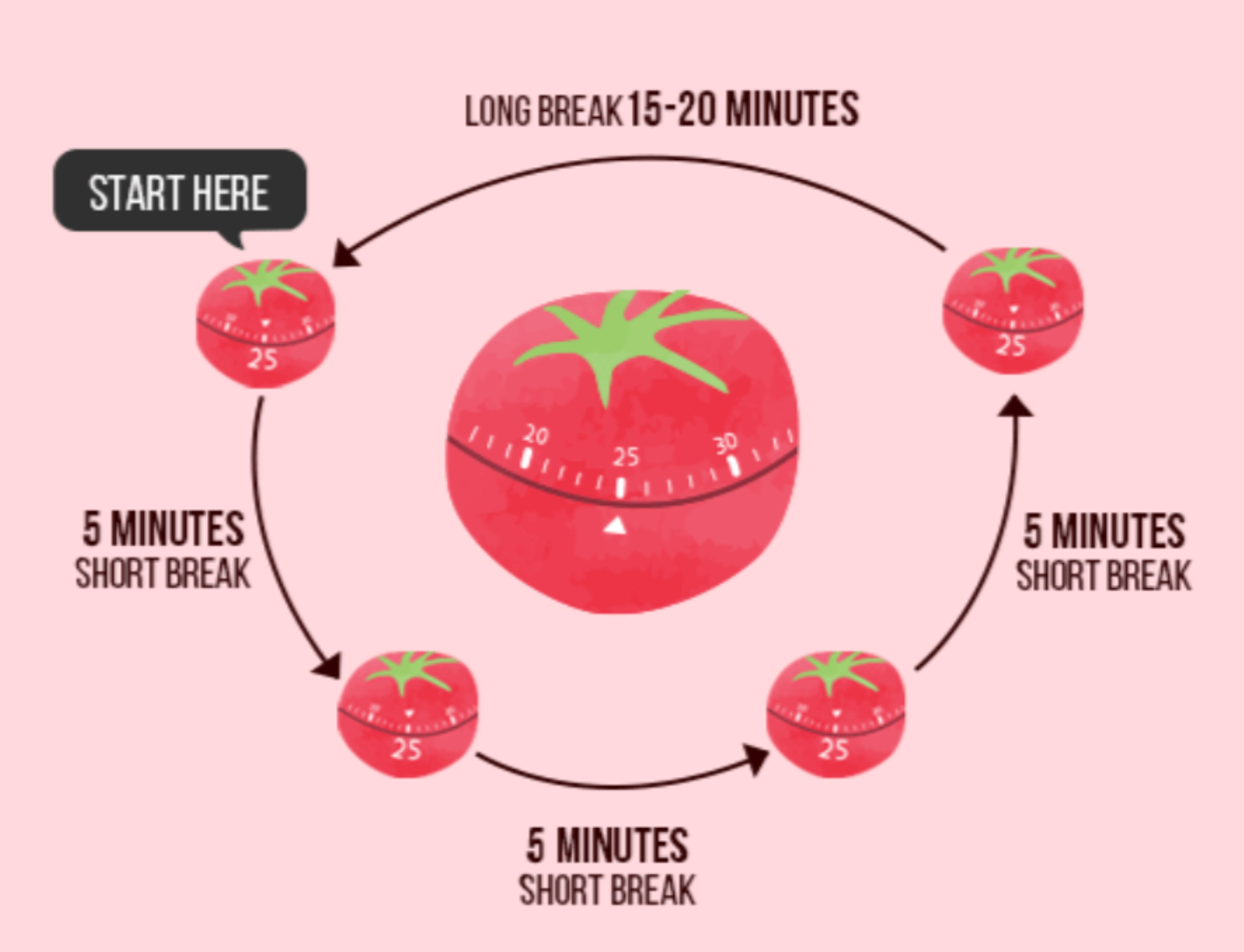
Do you know of the Pomodoro Technique? The time management method was developed in the late 1980s by then-university student Francesco Cirillo. It has since gained popularity, proving to be an effective method in boosting productivity for those who struggle to stay focused and find themselves getting distracted every few minutes. Try out the Pomodoro Technique today with just 5 simple steps!
1) Pick a task
2) Set a 25-minute timer
3) Work on a task until the time is up
4) Take a 5 minute break
5) Every 4 pomodoro, take a longer 15-30 minute break.
 CATCHWISE LEARNING